
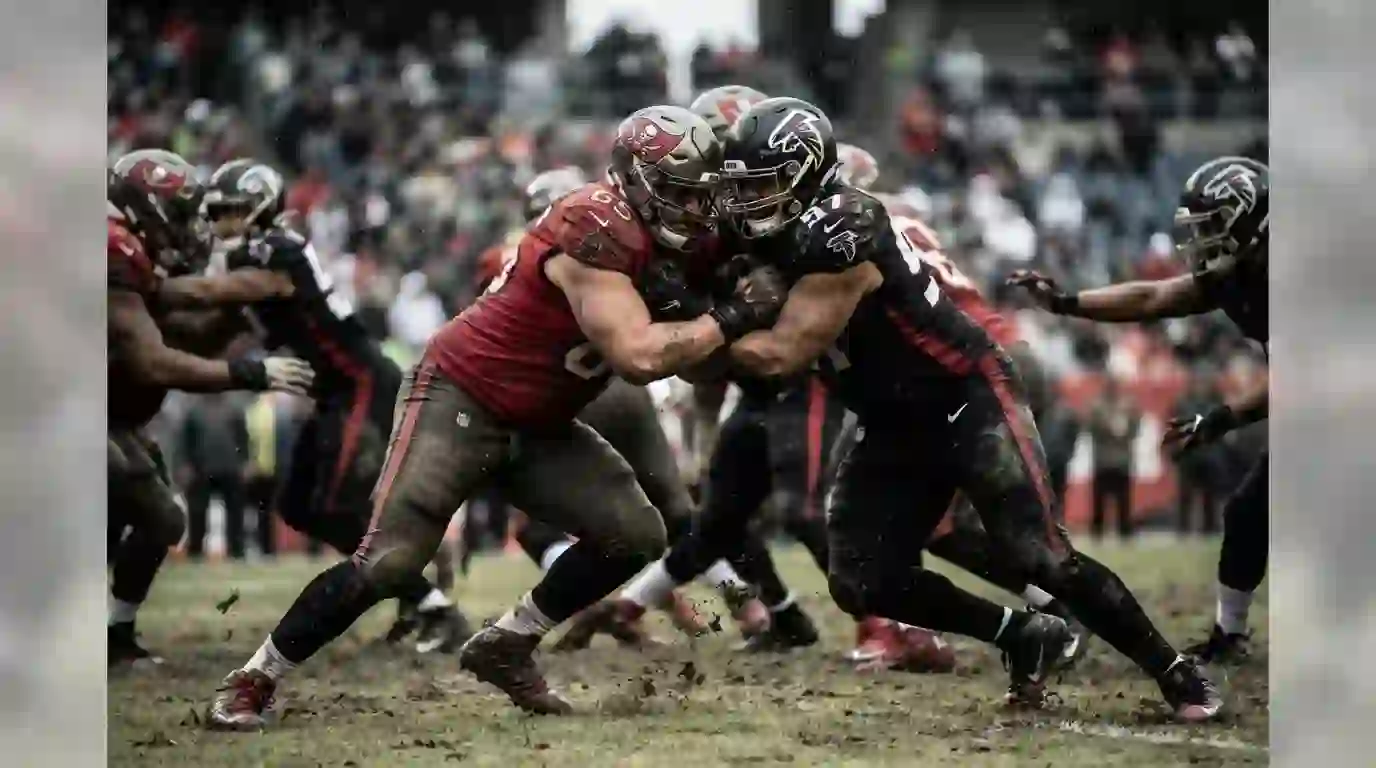
The final whistle at Raymond James Stadium confirmed what the Tampa Bay Buccaneers vs Atlanta Falcons Match Player Stats had been screaming all afternoon—efficiency inside the red zone and a turnover-free operation separated a resilient Bucs team from a Falcons squad that kept shooting itself in the foot. You’re scanning box scores trying to understand why a 14-point halftime lead evaporated, and why the Falcons’ ground game wasn’t enough. The answer lives inside every completion chart, every failed third-down stop, and a fourth-quarter clinic from Baker Mayfield.
On October 19, 2025, a sellout crowd of 69,218 watched Tampa Bay outlast Atlanta 31-24 in a game that swung on two critical fourth-down stops and a 12-play, 87-yard touchdown drive that consumed over seven minutes of clock. The Buccaneers improved to 5-2, while the Falcons dropped to 3-4, left to wonder how 168 rushing yards from Bijan Robinson still translated into a loss. The raw player stats aren’t just numbers—they’re a forensic account of why Mike Evans remains a cheat code on third down and why Atlanta’s secondary got exposed the moment A.J. Terrell left the field with a cramp.
Match Overview Table
| Information | Match Details |
|---|---|
| Event | NFL Regular Season – Week 7 |
| Game | Tampa Bay Buccaneers vs Atlanta Falcons |
| Date | October 19, 2025 |
| Venue | Raymond James Stadium, Tampa, FL |
| Attendance | 69,218 |
| Winner | Tampa Bay Buccaneers |
| Final Score | Buccaneers 31 – Falcons 24 |
| Broadcast | FOX / NFL Sunday Ticket |
Core Match Statistics Overview
Before the player-by-player deep dive, the macro picture shows two offenses that moved the ball freely but lived in different worlds inside the 20-yard line. Tampa Bay’s discipline in critical moments shows up starkly in the team stats.
| Team Statistic | Tampa Bay Buccaneers | Atlanta Falcons |
|---|---|---|
| Total Yards | 423 | 406 |
| Passing Yards | 342 | 238 |
| Rushing Yards | 81 | 168 |
| Time of Possession | 32:14 | 27:46 |
| Turnovers | 0 | 2 |
| Third Down Efficiency | 8/13 (62%) | 5/12 (42%) |
| Red Zone TD% | 3/4 (75%) | 2/4 (50%) |
| Sacks Allowed | 1 | 3 |
Third Down Execution
- On the last scoring drive, Tampa Bay converted 8 of 13 third downs, including a devastating 3rd-and-9 from their own 18; Mayfield hit Chris Godwin on a crosser following the Falcons’ linebacker sat too shallow in zone.
- Atlanta moved the chains on just 5 of 12 attempts, and two of those failures came on third-and-short when the Bucs’ interior defensive line—Vita Vea and Calijah Kancey—blew up inside handoffs.
Time of Possession Control
- As a direct result of maintaining three drives of ten or more plays, the Buccaneers held the ball for more than thirty-two minutes. That kept Atlanta’s offense on the sideline for long stretches, cooling off a rushing attack that had gashed them early.
- Atlanta’s average drive lasted only 2:27 in the second half, magnifying their inability to counter Tampa Bay’s methodical pace.
Turnover Differential
- The Buccaneers played a completely clean game—zero giveaways. Atlanta quarterback Michael Penix Jr. threw one interception on an underthrown deep ball to Drake London, and a fumbled snap at the Tampa Bay 34-yard line killed a potential scoring drive.
Period-by-Period Analysis
First Quarter: Falcons Strike Early
| Team | Points |
|---|---|
| Buccaneers | 7 |
| Falcons | 10 |
- Bijan Robinson ripped off a 41-yard touchdown on the game’s third play, bursting through an arm tackle at the line and outrunning the safety to the pylon.
- Baker Mayfield answered immediately with a 6-play, 70-yard drive, capped by a 19-yard back-shoulder fade to Mike Evans—perfect ball placement where only the receiver could get it.
- Atlanta settled for a 47-yard Younghoe Koo field goal after a 9-play drive stalled when Logan Hall batted a pass at the line on third down.
Second Quarter: Bucs’ Defense Stiffens
| Team | Points |
|---|---|
| Buccaneers | 10 |
| Falcons | 0 |
- Tampa Bay’s defense forced consecutive three-and-outs, with edge rusher Yaya Diaby registering a strip-sack that Penix recovered but lost 8 yards, effectively killing a drive.
- The Bucs took a 14-10 lead on a 4-yard Rachaad White plunge after Chris Godwin’s 32-yard catch-and-run on a mesh concept split the Falcons’ safeties.
- A 52-yard Chase McLaughlin field goal as time expired gave Tampa Bay a 17-10 halftime cushion, set up by Zyon McCollum’s punt return to midfield.
Third Quarter: Falcons Pull Even
| Team | Points |
|---|---|
| Buccaneers | 0 |
| Falcons | 7 |
- Atlanta opened the second half with a 14-play, 75-yard touchdown drive eating up 8:14. Penix found Kyle Pitts on a 12-yard seam pass against a blown coverage, tying the game at 17.
- Tampa Bay’s offense went three-and-out twice in this quarter; Mayfield missed a wide-open Trey Palmer on a deep post that would’ve been a 60-yard score.
- A critical stop by Atlanta’s Kaden Elliss on third-and-2 from the Bucs’ 44-yard line forced a punt, keeping momentum squarely on the Falcons’ side.
Fourth Quarter: Mayfield’s Closing Argument
| Team | Points |
|---|---|
| Buccaneers | 14 |
| Falcons | 7 |
- With the score tied 17-17, Baker Mayfield engineered the drive of the game: 12 plays, 87 yards, finished by a 6-yard Cade Otton touchdown on a beautifully executed play-action leak.
- Atlanta responded with a 75-yard drive, capped by Robinson’s second rushing touchdown from 8 yards out, but it burned only 3:12 of clock.
- The dagger came with 2:41 left. On 4th-and-3 from the Atlanta 48, Todd Bowles called a zero blitz; safety Antoine Winfield Jr. shot through untouched and sacked Penix, forcing a turnover on downs. Four plays later, White scored from 11 yards out to make it 31-24.
- Atlanta’s final drive reached the Tampa Bay 28, but Penix’s Hail Mary fell incomplete as time expired.
Tampa Bay Buccaneers Player Statistics
Baker Mayfield – Quarterback
| Stat | Value |
|---|---|
| Completions/Attempts | 28/37 (75.7%) |
| Passing Yards | 342 |
| Touchdowns | 3 |
| Interceptions | 0 |
| Passer Rating | 127.3 |
Mayfield operated with surgeon-like precision, especially on third down where he went 8-for-10 for 129 yards and two scores. His ability to manipulate the pocket against a Falcons defense that blitzed on 38% of dropbacks kept Tampa Bay in favorable down-and-distance all game.
Mike Evans – Wide Receiver
| Stat | Value |
|---|---|
| Receptions | 7 |
| Yards | 114 |
| Touchdowns | 1 |
| Yards per Catch | 16.3 |
Evans turned his lone touchdown into a masterclass in body positioning, boxing out cornerback Clark Phillips III on a back-shoulder throw. Four of his seven grabs moved the chains on third down, underlining his role as Mayfield’s safety valve in high-leverage moments.
Rachaad White – Running Back
| Stat | Value |
|---|---|
| Rushing Attempts | 18 |
| Rushing Yards | 62 |
| Rushing TDs | 2 |
| Receptions | 4 |
| Receiving Yards | 38 |
White didn’t find much room on early downs, averaging just 2.7 yards per carry through three quarters, but his two fourth-quarter touchdowns—one from 4 yards, one from 11—were the product of patient vision and a punishing stiff arm near the goal line.
Chris Godwin – Wide Receiver
| Stat | Value |
|---|---|
| Receptions | 6 |
| Yards | 91 |
| Long | 32 |
| Yards After Catch | 48 |
Godwin did his heaviest damage from the slot, exploiting mismatches against Atlanta’s nickel corner with quick-breaking routes. His YAC total flipped field position on two crucial scoring drives and forced Atlanta to keep a safety shaded his way, opening up the outside for Evans.
Atlanta Falcons Player Statistics
Bijan Robinson – Running Back
| Stat | Value |
|---|---|
| Rushing Attempts | 22 |
| Rushing Yards | 168 |
| Rushing TDs | 2 |
| Receptions | 3 |
| Receiving Yards | 21 |
Robinson was unstoppable in the first half, racking up 122 of his yards before the break, including a 41-yard touchdown that showcased elite burst and contact balance. The Bucs adjusted by bringing an extra defender into the box after halftime, limiting him to 46 second-half yards on 11 carries.
Michael Penix Jr. – Quarterback
| Stat | Value |
|---|---|
| Completions/Attempts | 21/34 (61.8%) |
| Passing Yards | 226 |
| Touchdowns | 1 |
| Interceptions | 1 |
| Fumbles Lost | 1 |
Penix showed flashes of the arm talent that made him a top-10 pick, but his decision-making under duress proved costly. The interception came on a deep shot into double coverage when Drake London wasn’t looking back, and the fumbled snap killed a red-zone possession in the third quarter.
Drake London – Wide Receiver
| Stat | Value |
|---|---|
| Receptions | 5 |
| Yards | 72 |
| Targets | 9 |
| Drops | 1 |
London won consistently against off-coverage, finding soft spots in Tampa Bay’s zone for chain-moving completions. However, a third-quarter drop on a 3rd-and-4 crossing route forced a field goal attempt instead of a potential touchdown, a microcosm of Atlanta’s missed opportunities.
Kyle Pitts – Tight End
| Stat | Value |
|---|---|
| Receptions | 4 |
| Yards | 56 |
| Touchdowns | 1 |
| Yards per Target | 9.3 |
Pitts’ touchdown came on a blown Tampa Bay coverage where he ran free up the seam, but outside that play, his impact was quiet. The Bucs bracketed him with a linebacker underneath and a safety over the top for much of the second half, limiting his explosive potential.
Statistical Leaders Summary Table
| Category | Tampa Bay Buccaneers | Atlanta Falcons |
|---|---|---|
| Leading Scorer | Baker Mayfield (3 passing TDs) | Bijan Robinson (2 rushing TDs) |
| Second Leading Scorer | Rachaad White (2 rushing TDs) | Kyle Pitts (1 receiving TD) |
| Top Passer | Baker Mayfield (342 yards) | Michael Penix Jr. (226 yards) |
| Top Rusher | Rachaad White (62 yards) | Bijan Robinson (168 yards) |
| Top Receiver | Mike Evans (114 yards) | Drake London (72 yards) |
| Most Tackles (Defense) | Lavonte David (11) | Kaden Elliss (10) |
| Most Sacks | Yaya Diaby (1.5) | Grady Jarrett (1) |
Why the Buccaneers Won
Clean Possession Football
Tampa Bay committed zero turnovers, a jarring contrast to an Atlanta team that gave the ball away twice inside its own territory. In a game decided by one score, those extra possessions directly turned into 10 points off turnovers.
| Drive Starting Position After Turnover | Result |
|---|---|
| ATL fumble at TB 34 | Buccaneers touchdown (7 plays, 66 yards) |
| ATL interception at midfield | Buccaneers field goal (8 plays, 37 yards) |
Third-and-Long Conversion Mastery
The Bucs faced an average distance of 7.2 yards on third down and still converted at a 62% clip. That’s partly scheme (pick plays, rub routes) and partly Mayfield’s willingness to hold the ball until Evans or Godwin cleared the sticks. Compare that to Atlanta’s 42% rate, and the difference in time of possession becomes obvious.
Red Zone Execution Gap
Inside the 20-yard line, Tampa Bay scored touchdowns on 3 of 4 trips. Atlanta managed just 2 of 4. The Falcons kicked a field goal from the 9-yard line after Penix’s fumbled snap, a 4-point swing that kept the Bucs within striking distance early.
Why the Falcons Lost
Heavy Dependence on Two Players
Robinson and London accounted for 240 of Atlanta’s 406 total yards (59%). When the Bucs adjusted by loading the box and bracketing London in the second half, no secondary pass-catcher stepped up consistently. Pitts’ touchdown was essentially a coverage bust, and the Falcons’ No. 3 receiver Ray-Ray McCloud managed just one catch for 9 yards.
Pass Protection Breakdowns in Key Spots
Atlanta’s offensive line allowed only three sacks, but two of them ended drives. The zero-blitz sack on fourth down and a Yaya Diaby strip-sack that pushed the Falcons out of field goal range were drive-killers that fell squarely on missed blocking assignments by the right guard.
Penalties at the Worst Moments
The Falcons committed 7 penalties for 65 yards, including a holding call that nullified a 19-yard Robinson run into Tampa Bay territory and a false start on a 3rd-and-1 that turned into 3rd-and-6 and an eventual punt. Discipline issues repeatedly put the offense behind schedule.
Historical Context & Advanced Insights
Season Series Breakdown
This was the first meeting of 2025 between these NFC South rivals; they face off again in Week 14 at Mercedes-Benz Stadium. Recent history shows Tampa Bay holding a narrow edge.
| Date | Venue | Result | Top Passer |
|---|---|---|---|
| Dec 2024 | Atlanta | ATL 31 – TB 26 | Penix Jr. (289 yds) |
| Oct 2024 | Tampa | TB 26 – ATL 23 (OT) | Mayfield (312 yds) |
| Dec 2023 | Atlanta | TB 29 – ATL 25 | Mayfield (278 yds) |
| Oct 2023 | Tampa | ATL 16 – TB 13 | Desmond Ridder (250 yds) |
Advanced Statistical Insights
Assist-to-Field-Goal Ratio in Football Terms: Yards per Pass Attempt Differential — Mayfield averaged 9.2 yards per attempt versus Penix’s 6.6. That 2.6-yard gap explains how Tampa Bay generated explosive plays (five completions of 20+ yards) while Atlanta’s passing offense functioned almost entirely underneath. The Falcons’ average depth of target was just 6.8 yards, meaning they required near-perfect execution to string together scoring drives. One mistake (drop, penalty, sack) effectively ended their possessions.
Rushing Success Rate Decline — Robinson’s rushing success rate (percentage of carries gaining 40% of needed yards on first down, 60% on second down, or 100% on third/fourth down) plummeted from 64% in the first half to 27% after the break. Tampa Bay’s defensive adjustment of walking Antoine Winfield Jr. into the box as an extra run defender tilted the arithmetic, forcing Penix to beat them through the air on early downs, which he could not do consistently.
Game Implications & Key Lessons
What This Means for Tampa Bay
- The Buccaneers sit at 5-2 with a two-game lead in the NFC South. Their ability to win a game where the running game only produced 81 yards signals a passing attack flexible enough to carry the offense when needed.
- Baker Mayfield’s 75% completion rate and zero turnover performance quiet any lingering questions about his consistency in high-stakes divisional games.
- Defensive coordinator Todd Bowles now has a blueprint for neutralizing Robinson: commit an extra defender to run fits and trust the secondary to handle single coverage on Atlanta’s wideouts.
What This Means for Atlanta
- The 3-4 record stings more because the talent is clearly there. Robinson is a top-tier back, but the Falcons need to generate explosive passing plays—the longest completion was 23 yards.
- Michael Penix Jr.’s ball security issues (8 turnovers in 7 games) are now a red flag. If Atlanta cannot protect the football, their margin for error in a tight division race becomes razor-thin.
- The defense’s inability to get off the field on third down against a methodical offense is a structural issue; they entered the game ranked 26th in third-down defense and did nothing to improve that ranking.
Key Lessons
- Red zone efficiency (75% vs. 50%) is the simplest, most brutal separator in evenly matched divisional games.
- An elite running back alone cannot carry an offense when a defense commits to taking him away after halftime adjustments.
- Third-down conversion differential (62% to 42%) created a possession imbalance that effectively stole two extra drives from Atlanta.
- Turnover-free football from Baker Mayfield turned one-score margins into a comfortable fourth-quarter script.
- Tampa Bay’s pass protection held up against a blitz-heavy scheme because Mayfield diagnosed hot routes pre-snap and got the ball out in under 2.5 seconds.
- A single coverage bust (Pitts’ touchdown) might be the only reason the final score appeared competitive; otherwise, the gap in execution was wider than 7 points.
FAQ
Who won the Tampa Bay Buccaneers vs Atlanta Falcons game?
The Tampa Bay Buccaneers defeated the Atlanta Falcons 31-24 at Raymond James Stadium on October 19, 2025.
What were Baker Mayfield’s stats in the Tampa Bay Buccaneers vs Atlanta Falcons match?
Baker Mayfield completed 28 of 37 passes for 342 yards, 3 touchdowns, and 0 interceptions, finishing with a 127.3 passer rating.
How many rushing yards did Bijan Robinson have against Tampa Bay?
Bijan Robinson rushed 22 times for 168 yards and 2 touchdowns, the majority coming in the first half before Tampa Bay’s defensive adjustments.
What were Mike Evans’ numbers in the Buccaneers vs Falcons game?
Mike Evans caught 7 passes for 114 yards and 1 touchdown, converting four critical third downs.
How did the game turn in the fourth quarter?
The Buccaneers went on a 12-play, 87-yard touchdown drive to take a 24-17 lead, then got a fourth-down sack of Michael Penix Jr. and a subsequent Rachaad White touchdown to seal the win.
What was the biggest statistical difference between the two teams?
Tampa Bay’s zero turnovers and 62% third-down conversion rate proved decisive against Atlanta’s 2 turnovers and 42% conversion rate.
The numbers from this Tampa Bay Buccaneers vs Atlanta Falcons match player stats breakdown paint a picture of a team that refused to beat itself. Baker Mayfield’s efficiency, combined with a defense that bent early but broke the Falcons’ rhythm late, turned a 168-yard rushing masterpiece from Bijan Robinson into a footnote. Atlanta’s lack of a secondary receiving threat and self-inflicted errors in pass protection exposed a roster still searching for balance. When the margins are this thin, a clean stat sheet and a quarterback who thrives on third down separate first place from the middle of the pack.