
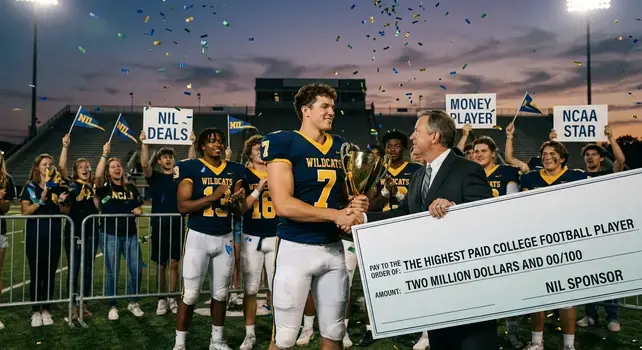
Highest Paid College Football Player: Complete 2025 NIL Earnings Guide
College football fans watch their favorite players generate billions in revenue yet see those athletes earn nothing from the NCAA directly. That frustration grows louder each season as quarterback deals and endorsement contracts make headlines. Finding out who the highest paid college football player actually is can feel impossible with conflicting reports everywhere. This guide cuts through the noise and gives you real numbers, real names, and real deals.
In 2025, who will be the most paid college football player?
Arch Manning currently sits at the top of the NIL valuation charts. The Texas Longhorns quarterback carries an estimated NIL value exceeding $6 million according to the On3 Sports NIL database. His family legacy and on-field performance fuel massive brand interest from national companies.
The race for the highest paid college football player shifts constantly. Transfer portal moves, breakout seasons, and new brand partnerships reshuffle the rankings every few months. Carson Beck, Shedeur Sanders, and Travis Hunter all compete for the top spot depending on the reporting period.
| Rank | Player | School | Position | Est. NIL Valuation |
| 1 | Arch Manning | Texas | QB | $6.8M |
| 2 | Carson Beck | Miami | QB | $5.5M |
| 3 | Shedeur Sanders | Colorado | QB | $5.2M |
| 4 | Travis Hunter | Colorado | WR/CB | $4.8M |
| 5 | Quinn Ewers | Texas | QB | $4.1M |
Source: On3 Sports NIL Valuations, 2025
How Much Does the Highest Paid College Football Player Earn?
The highest paid college football player pulls income from multiple streams. Brand endorsements, social media promotions, autograph signings, and personal appearances all contribute to the total figure. No single paycheck tells the full story.
Quarterbacks at powerhouse programs typically earn between $3 million and $7 million annually through NIL arrangements. These numbers dwarf what most professional rookies made a decade ago. The money flows from collectives, national brands, and local business partnerships.
| Income Stream | Est. Annual Earnings | % of Total NIL |
| Brand Endorsements | $2.5M – $4M | 45% |
| Collective Deals | $1M – $2M | 25% |
| Social Media Posts | $500K – $1M | 15% |
| Appearances & Camps | $300K – $600K | 10% |
| Merchandise & Licensing | $100K – $300K | 5% |
Which College Football NIL Deals Are the Best?
National brands now compete aggressively to sign college athletes. Nike, Gatorade, Beats by Dre, and Bose all hold active contracts with top-tier college football players. These deals often rival professional athlete endorsements in scope and visibility.
Arch Manning holds partnerships with several major brands that recognize his marketability across demographics. Shedeur Sanders signed deals that capitalize on both his athletic talent and his massive social media following. Travis Hunter commands attention from fashion and lifestyle brands that want to reach Gen Z consumers.
| Brand | Player | Deal Type | Est. Value |
| Nike | Multiple Top QBs | Apparel & Footwear | $500K+ |
| Gatorade | Arch Manning | Beverage Endorsement | $400K+ |
| Beats by Dre | Shedeur Sanders | Audio & Lifestyle | $300K+ |
| Bose | Travis Hunter | Audio Equipment | $250K+ |
| EA Sports | Multiple Players | Video Game Likeness | $200K+ |
How Did NIL Change College Football Player Pay?
The NCAA allowed athletes to profit from their name, image, and likeness starting July 1, 2021. That single policy shift dismantled decades of amateurism rules that prevented players from earning money. College athletes finally gained the right to sign endorsement contracts and monetize their personal brands.
Before NIL, the highest paid college football player technically earned zero dollars from their athletic performance. Scholarships covered tuition and living expenses, but players could not accept outside income. The NCAA v. Supreme Court decision.Alston accelerated the changes that made NIL possible.
| Year | NIL Milestone | Impact on Player Pay |
| 2021 | NIL Era Begins | First legal athlete endorsements |
| 2022 | Collectives Form | Boosted team-wide NIL funding |
| 2023 | Transfer Portal Boom | NIL drove massive player movement |
| 2024 | Revenue Sharing Talks | Schools prepare direct payments |
| 2025 | House v. NCAA Settlement | $20M+ per school revenue sharing |
Source: NCAA.org Official NIL Policy Documents
Which College Football Positions Earn the Most Money?
Quarterbacks dominate NIL earnings by a wide margin. The position carries the most visibility, the heaviest media coverage, and the strongest connection to team success. Brands want the face of the program, and that face almost always plays quarterback.
Wide receivers and dual-threat athletes follow quarterbacks in NIL value. Travis Hunter proved that a player who excels on both sides of the ball can attract premium deals. Running backs and defensive stars earn significantly less unless they achieve Heisman-level recognition.
| Position | Avg. Top-Tier NIL | Brand Appeal | Media Exposure |
| Quarterback | $3M – $7M | Very High | Maximum |
| Wide Receiver | $1M – $3M | High | High |
| Running Back | $500K – $1.5M | Moderate | Moderate |
| Edge Rusher | $300K – $1M | Low-Moderate | Low |
| Cornerback | $200K – $800K | Low | Low |
What Schools Produce the Highest Paid College Football Players?
Texas, Georgia, Ohio State, and Colorado lead the nation in total NIL valuation for football rosters. These programs combine massive fan bases, wealthy donor collectives, and national media exposure to attract top talent. The highest paid college football player almost always comes from a Power Four conference school.
Miami emerged as a major NIL player after aggressively pursuing transfer portal talent. The Hurricanes used collective funding to lure Carson Beck from Georgia with a package reportedly exceeding $4 million. Schools in the SEC and Big Ten consistently outspend other conferences in NIL support.
| School | Conference | Est. Team NIL Total | Top NIL Player |
| Texas | SEC | $18M+ | Arch Manning |
| Colorado | Big 12 | $14M+ | Shedeur Sanders |
| Georgia | SEC | $12M+ | Multiple |
| Ohio State | Big Ten | $11M+ | Multiple |
| Miami | ACC | $10M+ | Carson Beck |
How Do College Football Players Get NIL Deals?
Players secure NIL deals through agents, marketing firms, and collective organizations. Most top recruits sign with NIL agencies before they even step on campus. These agencies pitch the athlete’s brand value to corporations and negotiate contract terms.
Collectives operate as donor-funded organizations that pool money to support athletes at specific schools. They arrange deals for appearances, social media content, and community events. The highest paid college football player typically works with both a personal agency and a school-affiliated collective.
| Deal Source | How It Works | Typical Payout |
| National Brands | Direct endorsement contracts | $200K – $1M+ |
| NIL Collectives | Donor-pooled athlete support | $100K – $500K |
| Social Media | Sponsored posts and content | $10K – $100K per post |
| Local Businesses | Appearances and promotions | $5K – $50K |
| Autograph & Merch | Licensing personal brand | $10K – $75K |
What Are the Biggest NIL Contracts in College Football History?
The largest single NIL agreements in college football history involve multi-year commitments from major brands and collectives. Caleb Williams reportedly earned over $5 million during his final year at USC before entering the NFL Draft. His deals included partnerships with InBody, Beats, and Nissan.
Arch Manning’s cumulative NIL value continues to climb as he progresses through his Texas career. Shedeur Sanders signed a landmark deal with Gatorade that placed him alongside professional athletes in national campaigns. These contracts signal that college football now operates as a legitimate professional marketplace.
| Player | School | Year | Est. Total NIL | Key Deals |
| Caleb Williams | USC | 2023 | $5M+ | Beats, Nissan, InBody |
| Arch Manning | Texas | 2025 | $6.8M | Gatorade, Nike |
| Shedeur Sanders | Colorado | 2024 | $5.2M | Gatorade, Beats |
| Travis Hunter | Colorado | 2024 | $4.8M | Bose, EA Sports |
| Quinn Ewers | Texas | 2024 | $4.1M | Multiple Local & National |
How Does the Transfer Portal Affect College Football Pay?
The transfer portal turned NIL into a bidding war. Players now enter the portal specifically to secure larger NIL packages from competing schools. Carson Beck’s move from Georgia to Miami represents one of the clearest examples of NIL-driven transfer decisions.
Schools with aggressive collectives use the portal to acquire established talent by offering significant NIL increases. The highest paid college football player often sees their valuation jump after a high-profile transfer. This dynamic has reshaped roster construction across every Power Four program.
| Player | From | To | NIL Increase | Est. New Value |
| Carson Beck | Georgia | Miami | +$2M | $5.5M |
| Julian Sayin | Alabama | Ohio State | +$1.5M | $3M+ |
| DJ Lagway | Florida | Texas | +$1M | $2.5M+ |
| Drew Allar | Penn State | Retained | +$800K | $3.2M |
What Rules Govern NIL Earnings for College Athletes?
The NCAA permits athletes to earn NIL income but prohibits direct pay-for-play arrangements from schools. Athletes must report their deals to their compliance offices. State laws vary significantly, creating a patchwork of regulations that confuse players and administrators alike.
The House v. NCAA settlement approved in 2025 allows schools to share up to $20.5 million annually in revenue directly with athletes. This landmark agreement blurs the line between NIL and salary. The highest paid college football player will likely see their income structure change dramatically under these new rules.
| Rule Category | Current Status | Impact |
| Pay-for-Play Ban | Still Enforced | Schools cannot directly pay for performance |
| NIL Reporting | Required | Athletes must disclose all deals |
| State NIL Laws | Vary by State | 30+ states have active NIL legislation |
| Revenue Sharing | Approved 2025 | Up to $20.5M per school |
| Agent Representation | Permitted | Athletes can hire NIL agents |
Source: Forbes College Sports Business Reporting, 2025
Will College Football Players Get Salaries Soon?
The House v. NCAA settlement moves college sports closer to a salary model than ever before. Schools can now distribute revenue directly to athletes starting in the 2025-2026 academic year. This shift effectively creates a capped salary system within college athletics.
Quarterbacks and star players will capture the largest share of revenue distributions. The highest paid college football player could earn $8 million to $10 million annually when combining NIL deals with direct school payments. The traditional amateurism model is ending in real time.
| Proposed Model | Athlete Pay Structure | Timeline |
| Revenue Sharing | $20.5M cap per school | 2025-2026 |
| Employment Model | Athletes as university employees | Proposed 2027+ |
| Collective Cap | Regulated collective spending | Under Discussion |
| Free Agency | Open market player bidding | Unlikely Before 2028 |
How Do Endorsements Boost College Football Player Income?
Endorsement deals provide the largest single source of NIL income for top college athletes. A single national campaign with a brand like Nike or Gatorade can pay more than an entire year of collective funding. These deals reward marketability as much as athletic performance.
Social media following plays a critical role in endorsement value. Shedeur Sanders commands premium rates because his Instagram following exceeds 3 million. Travis Hunter attracts lifestyle and fashion brands that want access to his younger, trend-conscious audience.
| Endorsement Type | Avg. Deal Value | Duration | Platform |
| National TV Campaign | $500K – $1M+ | 1-2 Years | TV, Digital |
| Social Media Series | $50K – $200K | 6-12 Months | Instagram, TikTok |
| Product Placement | $25K – $100K | Per Campaign | YouTube, Instagram |
| Event Appearances | $10K – $50K | Single Event | In-Person |
| Video Game Likeness | $50K – $200K | Per Title | EA Sports FC, Madden |
Frequently Asked Questions
Who is the highest paid college football player right now?
Arch Manning holds the top NIL valuation in college football at approximately $6.8 million. His combination of on-field production at Texas and generational family name drives unmatched brand interest.
How much do top college football players make from NIL?
Elite college football players earn between $3 million and $7 million annually through NIL deals. Quarterbacks at major programs consistently top the earnings charts.
Can college football players get paid a salary?
The House v. NCAA settlement now allows schools to share up to $20.5 million in revenue with athletes. This functions similarly to a salary cap system starting in 2025.
What is the biggest NIL deal in college football?
Caleb Williams reportedly secured over $5 million in NIL deals during his final USC season. Arch Manning’s cumulative multi-year NIL portfolio now exceeds that figure.
Do all college football players earn NIL money?
No. Only a small percentage of college football players earn significant NIL income. Walk-ons and backup players at smaller programs often receive little to no NIL compensation.
How does the NCAA regulate NIL payments?
The NCAA requires athletes to report all NIL deals to their school compliance office. Direct pay-for-play from schools remains prohibited, though revenue sharing changes this landscape starting in 2025.
Take Action: Follow the NIL Revolution in Real Time
The college football pay landscape changes faster than any other area in sports right now. The highest paid college football player today could lose that title by next season through a single transfer or breakout performance. Staying informed gives you a sharper understanding of how money, talent, and competition intersect in modern college athletics.
Bookmark this page and check back each quarter for updated NIL rankings, new deal announcements, and rule changes that reshape player compensation. Share this guide with fellow fans who want real numbers instead of speculation. The NIL era is still young, and the biggest shifts are just getting started.