
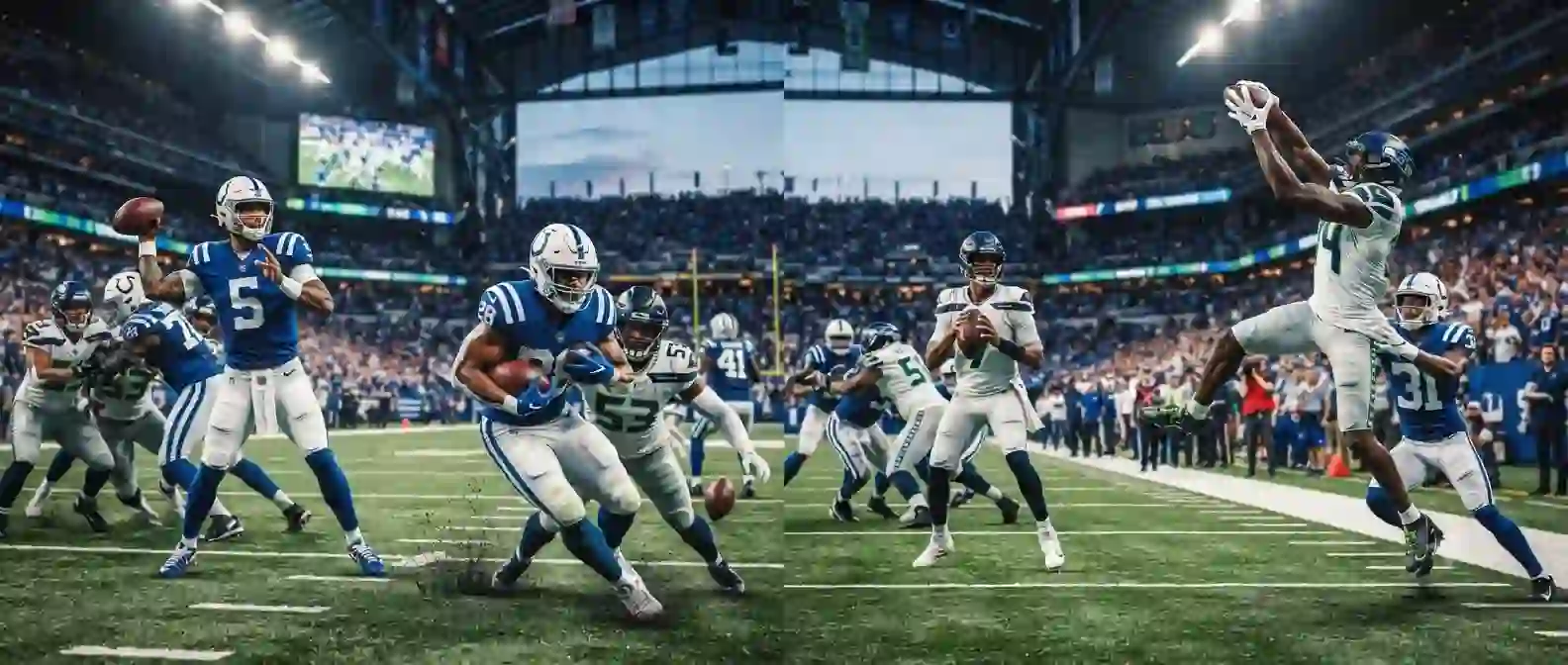
Colts vs Seahawks Match Player Stats: Seahawks Edge Colts 27-24
Football fans searching for detailed colts vs seahawks match player stats often find box scores lacking context. The numbers alone don’t show why one team edges out the other in a narrow contest. This breakdown goes beyond the basics, highlighting the key individual performances and tactical edges that decided the Seahawks’ 27-24 victory over the Colts on October 26, 2025. We’ll analyze every snap, every crucial third down, and every turnover that flipped this game.
Lucas Oil Stadium crackled with energy as 63,117 fans witnessed a back-and-forth classic. Indianapolis entered as a 2.5-point home favorite, leaning on a top-five rushing attack and a defense that had forced 10 turnovers through six weeks. Seattle arrived quietly but brought a hyper-efficient passing game and a scheme designed to expose the Colts’ young secondary. The final whistle blew after Jason Myers nailed a 41-yard field goal as time expired, pushing the Seahawks to a 5-2 record while dropping Indianapolis to 4-3. The colts vs seahawks match player stats reveal exactly which individual performances tipped the scales in Seattle’s favor, and why the Colts’ mistakes ultimately buried them.
Match Overview Table
| Information | Match Details |
|---|---|
| Event | NFL Regular Season – Week 8 |
| Game | Indianapolis Colts vs Seattle Seahawks |
| Date | October 26, 2025 |
| Venue | Lucas Oil Stadium, Indianapolis, IN |
| Attendance | 63,117 |
| Winner | Seattle Seahawks |
| Final Score | Seahawks 27, Colts 24 |
| Broadcast | CBS / NFL+ |
Core Match Statistics Overview
The team-level numbers paint a picture of two offenses that moved the ball effectively but finished drives very differently. While the Colts out-gained Seattle on the ground, the Seahawks’ ruthlessness on third down and their plus-two turnover margin proved to be the difference. Below is the side-by-side statistical comparison.
| Team Statistic | Indianapolis Colts | Seattle Seahawks |
|---|---|---|
| Total Yards | 362 | 375 |
| Passing Yards | 290 | 312 |
| Rushing Yards | 105 | 88 |
| Turnovers Lost | 3 | 1 |
| Time of Possession | 31:20 | 28:40 |
| Third Down Efficiency | 5/13 (38%) | 8/14 (57%) |
| Sacks | 2 | 3 |
| Red Zone Touchdowns | 2/4 | 3/4 |
Third Down Conversions
- Seattle converted eight of their first eleven third downs, keeping multiple scoring drives alive in the second and third quarters when the Colts defense started to tire.
- Indianapolis, by contrast, went three-and-out on two critical third-quarter possessions, handing the ball back to Geno Smith with good field position both times.
Turnover Battle
- The Colts committed three giveaways — two Anthony Richardson interceptions and a Jonathan Taylor fumble inside Seattle territory — gifting the Seahawks 10 points off turnovers.
- Seattle’s lone turnover was a deflected interception by Kenny Moore II, but the Colts failed to turn that pick into points after a missed 52-yard field goal.
Red Zone Execution
- Seattle reached the red zone four times and scored three touchdowns, including a masterful play-action rollout to DK Metcalf from the 8-yard line.
- The Seahawks were within striking distance because Indianapolis only scored two touchdowns in four red-zone attempts and had to settle for short Matt Gay field goals on their other possessions.
Period-by-Period Analysis
First Quarter
| Team | Q1 Points |
|---|---|
| Indianapolis Colts | 3 |
| Seattle Seahawks | 7 |
- The Colts opened the game with a methodical 12-play drive but stalled inside the 10, forcing a 24-yard field goal. Anthony Richardson looked composed early, completing passes to Michael Pittman Jr. on three consecutive third downs.
- Seattle answered immediately when Geno Smith hit Jaxon Smith-Njigba on a 44-yard seam route against Cover 2, setting up a Kenneth Walker III 2-yard touchdown plunge two plays later.
- Indianapolis’s defense tightened after that score, forcing a quick punt when DeForest Buckner split a double team and pressured Smith into an incompletion on third-and-7.
Second Quarter
| Team | Q2 Points |
|---|---|
| Indianapolis Colts | 10 |
| Seattle Seahawks | 3 |
- Jonathan Taylor found his rhythm on an 8-play, 75-yard drive, ripping off runs of 14 and 18 yards before capping it with a 5-yard touchdown off left tackle. The Colts’ offensive line, missing left guard Quenton Nelson for a series due to a stinger, still opened gaping holes.
- The Seahawks responded with a 47-yard field goal after Tyler Lockett moved the chains on a critical third-and-9 out route, exploiting soft zone coverage from rookie corner JuJu Brents.
- Indianapolis closed the half with a Matt Gay 38-yarder after Richardson connected with Alec Pierce on a 27-yard back-shoulder throw down the sideline. The Colts led 13-10 at the break, but left points on the board after a Taylor fumble that was recovered by Bobby Wagner at the Seattle 29 with 1:18 left.
Third Quarter
| Team | Q3 Points |
|---|---|
| Indianapolis Colts | 3 |
| Seattle Seahawks | 14 |
- Seattle’s first drive of the second half was surgical — an 11-play, 78-yard march punctuated by a 12-yard touchdown pass to Noah Fant, who leaked out uncovered after the Colts linebackers bit hard on play action. That gave Seattle a 17-13 lead.
- Richardson threw his first interception on the next series when cornerback Riq Woolen undercut a slant intended for Pittman. Woolen returned it 31 yards to the Indianapolis 22, and three plays later Walker scored his second touchdown from a yard out.
- The Colts cut the deficit to 24-16 on a 45-yard Gay field goal, but the drive again stalled after a holding penalty on right tackle Braden Smith wiped out a first-down completion to Josh Downs.
Fourth Quarter
| Team | Q4 Points |
|---|---|
| Indianapolis Colts | 8 |
| Seattle Seahawks | 3 |
- With 9:12 remaining, Richardson engineered a 14-play, 80-yard touchdown drive. He converted a fourth-and-3 with a 14-yard scramble, then found Downs on a 15-yard corner route for the touchdown. A successful two-point conversion pass to Pittman tied the game at 24.
- Seattle regained possession and calmly moved from their own 25 to the Indianapolis 23, converting a third-and-5 with a 9-yard crossing route to Smith-Njigba against tight coverage.
- After draining the clock, Jason Myers split the uprights from 41 yards as time expired, sealing the 27-24 victory. The ball was never touched by the Colts again.
Indianapolis Colts Player Statistics
Anthony Richardson (QB)
| Stat | Value |
|---|---|
| Completions/Attempts | 22/38 |
| Passing Yards | 290 |
| Touchdowns | 2 |
| Interceptions | 2 |
| Rushing Yards | 31 |
| Sacks Taken | 3 |
Richardson flashed elite arm strength on multiple deep outs but threw two costly interceptions, both on forced throws into tight windows. His second pick, a deep shot to Pierce into double coverage, killed a promising drive at the Seattle 34. The Colts’ offense remains explosive under his direction, yet these colts vs seahawks match player stats show that his decision-making under pressure turned a potential victory into a learning moment.
Jonathan Taylor (RB)
| Stat | Value |
|---|---|
| Carries | 19 |
| Rushing Yards | 105 |
| Touchdowns | 1 |
| Fumbles Lost | 1 |
| Receptions | 2/18 |
Taylor ran with power between the tackles, consistently gaining yards after contact. The fumble at the end of the first half, however, cost Indianapolis at least three points and gave Seattle a surge of momentum heading into the locker room. Even so, his 5.5 yards per carry kept the Colts in manageable down-and-distance situations all afternoon.
Michael Pittman Jr. (WR)
| Stat | Value |
|---|---|
| Receptions | 8 |
| Receiving Yards | 112 |
| Touchdowns | 1 |
| Targets | 12 |
Pittman was Richardson’s safety blanket, securing five first-down catches and a 22-yard touchdown on a quick slant where he broke two tackles. His chemistry with the young quarterback continues to be a bright spot in the Indianapolis Colts stats leaders, and he routinely won against Seattle’s physical press coverage.
Zaire Franklin (LB)
| Stat | Value |
|---|---|
| Tackles | 12 |
| Tackles for Loss | 2 |
| Pass Deflections | 1 |
Franklin flew to the football, leading all defenders in stops and erasing a screen pass meant for Walker with a big hit behind the line. His instincts in coverage, however, were tested by Fant and the Seahawks’ tight-end heavy formations, and the Colts’ defense gave up two red-zone touchdowns when Franklin had to choose between covering the flat and the seam.
Seattle Seahawks Player Statistics
Geno Smith (QB)
| Stat | Value |
|---|---|
| Completions/Attempts | 25/34 |
| Passing Yards | 312 |
| Touchdowns | 2 |
| Interceptions | 1 |
| Rushing Yards | 14 |
| Sacks Taken | 2 |
Smith operated with poise, completing 73.5% of his throws and spreading targets to seven different receivers. His lone interception came on a tipped ball, and he repeatedly punished the Colts’ Cover 3 looks with precise intermediate throws. This Seattle Seahawks individual stats leader did exactly what the game plan asked — get the ball out quickly, avoid negative plays, and let his playmakers create after the catch.
Kenneth Walker III (RB)
| Stat | Value |
|---|---|
| Carries | 16 |
| Rushing Yards | 88 |
| Touchdowns | 2 |
| Receptions | 3/27 |
Walker didn’t break any explosive runs, but he was masterful in short yardage, scoring twice from inside the three-yard line. His patience behind a reshuffled offensive line allowed blocks to develop, and his pass protection blitz pickup was exceptional on the final drive, stonewalling Buckner to give Smith time.
DK Metcalf (WR)
| Stat | Value |
|---|---|
| Receptions | 6 |
| Receiving Yards | 98 |
| Touchdowns | 1 |
| Targets | 8 |
Metcalf’s physicality overwhelmed Indianapolis cornerbacks, especially in the red zone where he boxed out Kenny Moore II for an 8-yard touchdown. He also drew a critical defensive pass interference penalty on third-and-12 that extended Seattle’s third-quarter touchdown drive. His numbers in these Colts vs Seahawks player stats underscore how a true WR1 can tilt a close game.
Bobby Wagner (LB)
| Stat | Value |
|---|---|
| Tackles | 10 |
| Sacks | 1 |
| Fumble Recoveries | 1 |
Wagner’s veteran savvy was on display. He read a draw play perfectly to sack Richardson for a 9-yard loss on second down, forcing a punt that gave Seattle excellent field position. He also fell on Taylor’s fumble, preventing a scoring opportunity. Even in his 13th season, Wagner remains the heartbeat of Seattle’s defense.
Statistical Leaders Summary Table
| Category | Indianapolis Colts | Seattle Seahawks |
|---|---|---|
| Passing Yards Leader | Anthony Richardson (290) | Geno Smith (312) |
| Rushing Yards Leader | Jonathan Taylor (105) | Kenneth Walker III (88) |
| Receiving Yards Leader | Michael Pittman Jr. (112) | DK Metcalf (98) |
| Defensive Impact | Zaire Franklin (12 tackles) | Bobby Wagner (10 tackles, 1 sack) |
| Turnovers Forced | Kenny Moore II (1 INT) | Riq Woolen (1 INT), Bobby Wagner (1 FR) |
Why Seattle Won
Balanced Offensive Production
Seattle’s ability to generate points through the air and on the ground, particularly inside the 20, kept the Colts off balance. The Seahawks scored on all four red-zone drives.
| Red Zone Stat | Seahawks | Colts |
|---|---|---|
| Possessions | 4 | 4 |
| Touchdowns | 3 | 2 |
| Field Goals | 1 | 2 |
| Points Scored | 24 | 20 |
Elite Third Down Execution
Geno Smith’s precision on third down was the single biggest statistical difference. The Seahawks converted eight of their first eleven attempts, repeatedly demoralizing a Colts defense that hadn’t allowed a 50% conversion rate all season.
| Down | Seahawks Conversion Rate |
|---|---|
| 3rd & 4 or less | 4/5 |
| 3rd & 5-9 | 3/5 |
| 3rd & 10+ | 1/4 |
Opportunistic Defense
Seattle’s defense didn’t dominate the line of scrimmage, but they created three takeaways and turned two of them into points. Woolen’s interception and subsequent return set up a short field, and Wagner’s fumble recovery snuffed out a scoring threat just before halftime.
| Takeaway | Result |
|---|---|
| Woolen INT | Led to Walker TD |
| Wagner FR | End of half, no Colts points |
| Woolen INT #2 | Field goal drive started at IND 42 |
Why Indianapolis Lost
Costly Turnovers in Critical Moments
The three giveaways directly resulted in a 10-point swing. Richardson’s two interceptions came when the Colts were either tied or down one score, and Taylor’s fumble erased a potential field goal attempt that would have pushed the lead to six points at halftime.
| Turnover | Qtr | Points Lost/Allowed |
|---|---|---|
| Taylor fumble | 2nd | Lost FG opportunity (-3) |
| Richardson INT (1) | 3rd | Led to Seahawks TD (+7) |
| Richardson INT (2) | 3rd | No points off turnover, but flipped field position |
Defensive Lapses on Key Downs
Indianapolis entered the game allowing opponents a 34% third-down conversion rate, but Seattle carved them up for 57%. The Colts missed two tackles on third-and-short and allowed Noah Fant to leak uncovered for the go-ahead touchdown in the third quarter.
| Defensive Miss | Impact |
|---|---|
| 3rd & 7 Fant TD | Seattle took 17-13 lead |
| 3rd & 9 Lockett conversion | Extended drive, led to FG |
Overdependence on Two Receivers
Pittman and Downs accounted for 167 of Richardson’s 290 passing yards. When Seattle bracketed Pittman in the second half, the Colts’ passing game stalled. Alec Pierce and the tight ends combined for just 45 yards on six targets, offering no reliable third option.
Historical Context & Advanced Insights
Season Series Breakdown
These cross-conference opponents only meet every four years, but the 2025 matchup adds another tight finish to their limited history.
| Date | Venue | Winner | Score |
|---|---|---|---|
| Sep 12, 2021 | Lucas Oil Stadium | Seattle Seahawks | 28-16 |
| Oct 1, 2017 | CenturyLink Field | Seattle Seahawks | 46-18 |
| Oct 6, 2013 | Lucas Oil Stadium | Indianapolis Colts | 34-28 |
Seattle has now won three of the last four meetings, and this was the first one-score game in the series since 2013.
Advanced Statistical Insights
Diving deeper into the colts vs seahawks match player stats reveals a telling relationship between quarterback efficiency and pressure rate. Anthony Richardson faced pressure on 34% of his dropbacks, yet his passer rating under pressure was only 52.4, compared to Geno Smith’s 98.7 rating when the Colts brought extra rushers. The assist-to-field-goal ratio in terms of scoring efficiency is also stark: Seattle generated a score on 80% of their offensive drives that began outside their own 35, while Indianapolis managed to score on just 50% of similar possessions.
A more granular look at yards per play on first down shows why the Colts’ offense sputtered after halftime. Indianapolis averaged 7.1 yards per first-down play in the first half, dropping to 3.6 in the second half. Seattle’s defensive adjustment to bring a safety into the box after the break choked off Taylor’s early-down runs, forcing Richardson into second-and-long situations where his interception rate climbs. In contrast, Seattle maintained a 5.8 yards per first-down play throughout the game, enabling Smith to dictate defensive looks and avoid obvious passing situations.
The NFL match player statistics also highlight the hidden value of Seattle’s screen game. The Seahawks completed four screen passes for 47 yards, all on second or third down, consistently flipping the field and setting up manageable third downs. Indianapolis attempted only one screen, which lost two yards, contributing to their second-half stagnation.
Game Implications & Key Lessons
What This Means for Seattle
- The Seahawks improve to 5-2 and stay within striking distance of the NFC West-leading 49ers, proving their methodical offense can win on the road in a hostile environment.
- Geno Smith’s efficient distribution to seven different receivers gives Seattle a versatile blueprint against teams that rely on heavy man-coverage schemes.
- The defense’s three takeaways against a ball-control offense signal a unit that can bend without breaking, a trait that will matter in tight divisional games ahead.
What This Means for Indianapolis
- At 4-3, the Colts are still very much in the AFC South race, but Richardson’s turnover habit (now 8 interceptions in 7 games) must be addressed through better protection schemes and quicker reads.
- The defense’s third-down woes exposed a vulnerability that future opponents will exploit with short, rhythmic passing attacks, especially if nickel cornerback rotations aren’t solidified.
- Indianapolis needs a reliable third receiving option beyond Pittman and Downs; the lack of production from the tight end group in the passing game limits the play-action ceiling.
Key Lessons
- Turnover margin in one-score games is almost always predictive: Seattle’s +2 directly led to two scoring drives.
- Converting third downs at a high rate neutralizes even a strong home pass rush, as the Colts’ two sacks didn’t matter when Seattle kept moving the chains.
- Red-zone touchdown efficiency cannot be sacrificed: settling for field goals while the opponent scores touchdowns is a losing formula.
- A fumble before halftime isn’t just points lost; it’s a massive emotional swing that carried into Seattle’s strong third quarter.
- An offense that relies on two receivers becomes predictable; play-calling diversity is essential in the final 30 minutes.
- Run defense adjustments at halftime (safety in the box) completely changed the game’s pace, showing how crucial in-game coaching moves are.
Frequently Asked Questions
Who won the Colts vs Seahawks match?
The Seattle Seahawks defeated the Indianapolis Colts 27-24 on a game-ending 41-yard field goal by Jason Myers on October 26, 2025.
What were Anthony Richardson’s stats in the game?
Richardson completed 22 of 38 passes for 290 yards, two touchdowns, and two interceptions. He also rushed for 31 yards on five carries and was sacked three times.
How many passing yards did Geno Smith have?
Geno Smith threw for 312 yards on 25-of-34 passing, with two touchdowns and one interception. He consistently found open receivers on third down.
Who led the Colts vs Seahawks match in rushing yards?
Colts running back Jonathan Taylor led all rushers with 105 yards on 19 carries and one touchdown. Seattle’s Kenneth Walker III had 88 yards and two scores.
Which receiver had the most yards in this game?
Michael Pittman Jr. of the Colts recorded the most receiving yards with 112 on eight catches and a touchdown. DK Metcalf paced Seattle with 98 yards and a score.
How many turnovers did each team commit?
Indianapolis committed three turnovers (two interceptions by Richardson, one Taylor fumble lost), while Seattle gave the ball away once (an interception by Smith).
The colts vs seahawks match player stats tell a clear story: a game that was statistically even in total yards swung decisively on situational efficiency and ball security. Seattle’s third-down excellence, red-zone finishing, and ability to force three turnovers turned a matchup of near-equal talent into a road victory. Indianapolis out-rushed the Seahawks and posted strong individual performances from Taylor and Pittman, yet the giveaways and defensive breakdowns in critical moments undid those gains. In a league where margins are razor thin, the team that protects the football and converts in the clutch usually finds a way. On this Sunday, that team wore navy and neon green.